Many people genuinely feel more joint and muscle stiffness during Kerala's monsoon, and there is real research linking falling barometric pressure and dropping temperatures to increased joint pain, though scientists are still not entirely certain why. Warm oil massage and steady bodywork will not stop the rain, but they are a sensible, comforting response to the stiffness it tends to bring.
Does the weather really affect joint pain?
The connection is more than folk wisdom. Studies covered by the Cleveland Clinic and the Arthritis Foundation have found that a meaningful share of people with osteoarthritis report their joints get worse with weather changes, and that both falling barometric pressure and dropping temperature correlate with increased pain in surveyed patients. A large British study of more than 2,600 participants found a modest but significant link between joint pain and a combination of humidity, air pressure and wind speed. Researchers have not settled on one exact mechanism, but a leading theory is that lower barometric pressure allows tissue around the joints to expand slightly, increasing swelling and irritating already-sensitive joints. It's worth being honest that the research is real but not fully conclusive, and not everyone is affected equally.
Why does Kerala's monsoon make it worse?
Kerala's southwest monsoon arrives around the start of June and runs through September, followed by a lighter northeast monsoon from October into December, according to Kerala Tourism and the India Meteorological Department. Through these months, the state sees a sustained pattern of falling pressure ahead of rain, high humidity, and a noticeable drop in temperature, especially in the evenings. For anyone already prone to stiff knees, aching shoulders or a cranky lower back, that combination, repeated for weeks, is exactly the kind of weather pattern the research above associates with flare-ups. Damp, cooler air also tends to make muscles feel tighter and slower to warm up, even without a diagnosed joint condition.
What actually helps during monsoon stiffness?
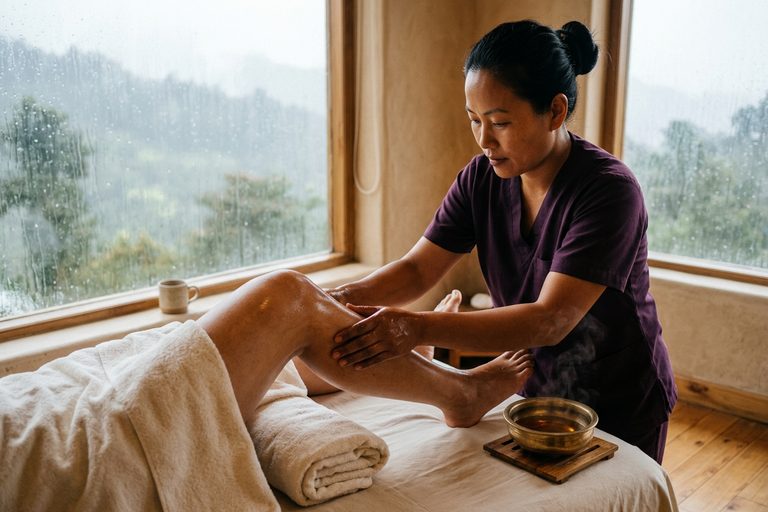
Movement and warmth are the two most consistently recommended responses. Keeping joints moving with gentle daily activity, staying warm rather than letting damp evenings chill stiff areas, and easing general muscle tightness with regular massage are all sensible, low-risk habits during the wetter months. Warm oil and heated hands are a particularly good match for monsoon stiffness, which is part of why traditional Kerala bodywork has always leaned on warmed oils rather than cool ones.
A deep tissue massage is a good option when stiffness settles into specific, stubborn spots such as the lower back or shoulders, working firmly through the muscle layers that tighten around an achy joint. For a gentler, whole-body approach rooted in the region's own tradition of warm oil, our Indian Heritage Massage uses warmed, herbal-infused oil across a full three-hour session, exactly the kind of sustained warmth monsoon muscles respond well to. Neither is a medical treatment for arthritis or any diagnosed joint condition; they are comfort-focused therapies, not clinical care.
A few honest cautions
If you have a diagnosed joint condition such as arthritis, or pain that is sharp, swollen or worsening, see a doctor rather than relying on massage alone. Tell your therapist about any joint issues before your session so pressure can be adjusted appropriately, and treat massage as a way to manage comfort and stiffness, not as a substitute for medical care.
Frequently asked questions
Is it really true that rain makes joints hurt more, or is that just an old belief? There is genuine research behind it, not just folklore. Multiple studies have found correlations between falling barometric pressure, temperature drops, and increased joint pain, though the exact mechanism and how strongly it affects each person is still not fully settled science.
Can massage cure monsoon joint pain? No, and it should not be marketed that way. Massage does not cure arthritis or any underlying joint condition. What it reliably offers is warmth, improved circulation and reduced muscle tension around the affected area, which many people find genuinely comforting during damp, cooler months.
Which is better for monsoon stiffness: deep tissue or a warm oil massage? It depends on where the stiffness sits. Firm, localised tightness responds well to a deep tissue session, while a general, whole-body ache is often better suited to a warm, oil-forward treatment like the Indian Heritage Massage. If you are unsure, describe your symptoms to your therapist and they will recommend the better fit.
Kerala's monsoon is beautiful and, for many bodies, genuinely a little harder on the joints. At Nola Wellness Spa in Kakkanad, our therapists work with warm oils and steady pressure to ease that seasonal stiffness in a private, unisex treatment room, open daily from 11 am to 9:30 pm. Call or WhatsApp us on +91 99955 56302 to book your session.