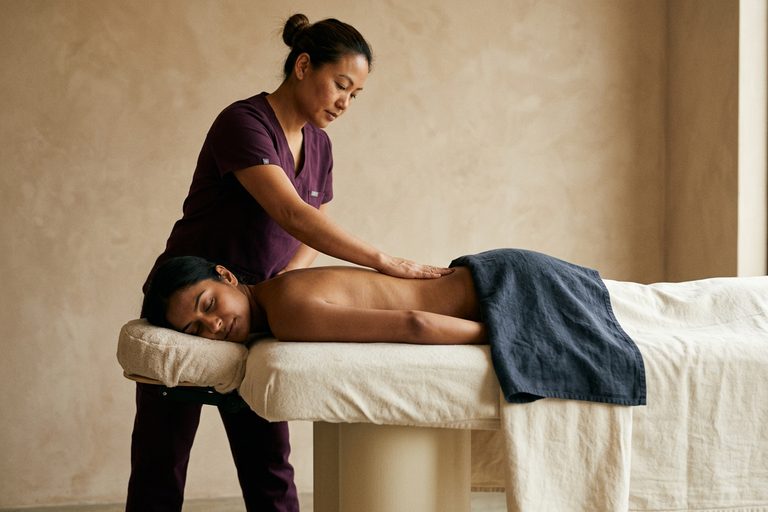
Touch calms anxiety because it directly engages the nervous system, not just the mind. Moderate pressure on the skin activates receptors that signal safety to the brain, shifting the body out of fight-or-flight and into a more parasympathetic, rest-and-digest state. Research links this to lower cortisol, higher serotonin and dopamine, and in some studies, an increase in oxytocin, all of which help explain why a massage can leave you calmer well after the session ends.
What happens in the nervous system during a massage?
Decades of research from the Touch Research Institute at the University of Miami, led by Dr. Tiffany Field, have examined exactly this question. Their body of work, spanning hundreds of peer-reviewed studies, has found that moderate pressure massage increases vagal activity, a marker of parasympathetic nervous system engagement, and is associated with decreased cortisol and reduced heart rate. In simpler terms, the steady, grounding pressure of a massage appears to tell the nervous system that it is safe to stand down from high alert. This is consistent with what Harvard Health Publishing describes as the "healing power of touch," including its documented effects on anxiety and stress recovery.
Does massage really release oxytocin?
Oxytocin, sometimes called the "bonding hormone," is one proposed mechanism behind touch's calming effect, released in response to skin-to-skin contact and gentle pressure. It's an active area of research rather than a settled fact: some studies support a measurable oxytocin response to massage and touch therapies, while the picture across different techniques and populations is still being filled in. What is more consistently documented is the broader hormonal shift massage produces. One widely cited study from the Touch Research Institute found serotonin increased by an average of 28% and dopamine by 31% following massage therapy, both neurotransmitters closely tied to mood regulation.
What does the research say about massage and anxiety specifically?
Multiple peer-reviewed studies support massage as a meaningful complementary approach for generalized anxiety, situational stress, and low mood, and Mayo Clinic notes that massage can lower stress hormones, improve mood, and ease symptoms of anxiety and depression as part of a broader care plan. It's worth being precise about the cortisol research, though: a widely cited 2011 review of 18 studies found that massage's effect on cortisol specifically was small and often not statistically significant, even though the same body of research still supported real reductions in anxiety and depressive symptoms through other pathways. In other words, the calm you feel is well documented, even if scientists are still refining exactly which hormone is doing the most work.
Why moderate pressure seems to matter most
An interesting and consistent finding across touch research is that pressure matters more than force. Moderate, sustained pressure activates the pressure receptors linked to parasympathetic calm more reliably than very light, feathery touch, which is one reason a full-body Swedish massage or a warming aromatherapy massage tends to feel more settling than a superficial rub. For guests who want the fullest version of this calming effect, our Nola Signature massage blends several techniques at a pressure adjusted to what your body actually needs that day.
Frequently asked questions
How quickly does massage reduce anxiety? Many people notice a calmer state during or immediately after a session, linked to lower heart rate and reduced muscle tension. Longer-term anxiety reduction tends to build with regular sessions rather than a single visit.
Can massage help with diagnosed anxiety disorders, or only everyday stress? Research supports massage as a helpful complementary approach alongside standard treatment for anxiety, not a replacement for therapy or medication where those are needed. It's worth discussing with your doctor or therapist how massage might fit into an existing treatment plan.
Which type of massage is best for anxiety relief? Techniques using slow, moderate, sustained pressure, such as Swedish or aromatherapy massage, are most consistently linked in research to nervous system calming and mood benefits, more so than very light or very intense pressure.
If everyday anxiety or a stressful week has your nervous system stuck on high alert, a session at Nola Wellness Spa in Kakkanad is a genuinely evidence-backed way to unwind. We're open daily, 11 am to 9:30 pm, in fully private treatment rooms; call or WhatsApp +91 99955 56302 to book.